We support international medical institutes in connecting with Taiwan's Center for External AI Validation in Healthcare. Through our Federated Learning Matchmaking Platform, both local and international hospitals can act as project proposers and matchmaking participants. This enables hospitals with federated learning needs to submit proposals, specify required sample sizes, and define resource demands across all nodes. Concurrently, other hospitals can join matches based on topics of interest and review the specific model training details of each project.
The Matchmaking Platform: Strategic Coordination
While the federated learning platform handles the heavy lifting of computation, the MOHW matchmaking platform serves as the administrative and strategic hub. It connects hospitals initiating federated learning projects with other healthcare institutions based on the specific requirements of the collaborative framework. The Matchmaking Platform functions as a coordination interface and operates through several key pillars:
- Technical & Resource Synchronization: The platform filters and matches partners based on technical specifications. It ensures that participating hospital nodes possess the necessary local hardware (specifically GPU VRAM, CPU cores, and RAM) to support the specific NVFLARE workloads assigned to them.
- Multi-Center Data Scale Coordination: Hospitals with requirements for initiating federated learning projects can specify requirements for de-identified case volumes and annotation categories (e.g., Healthy Control vs. Experimental groups). This ensures that the datasets distributed across the national FL network maintain high clinical relevance and quality.
Importantly, the matchmaking platform simplifies the selection of partnership frameworks, allowing participants to choose a model that fits their strategic goals:
- Shared IP Model: Joint ownership of the final model with revenue-sharing based on data contribution weighting.
- Co-Authorship Model: Participating hospitals in the matchmaking process are entitled to co-authorship of research findings and the right to publish academic papers.
- Validation Service Model: A "service-for-licensing" approach where participants receive compensation for data annotation and field testing on the national infrastructure.
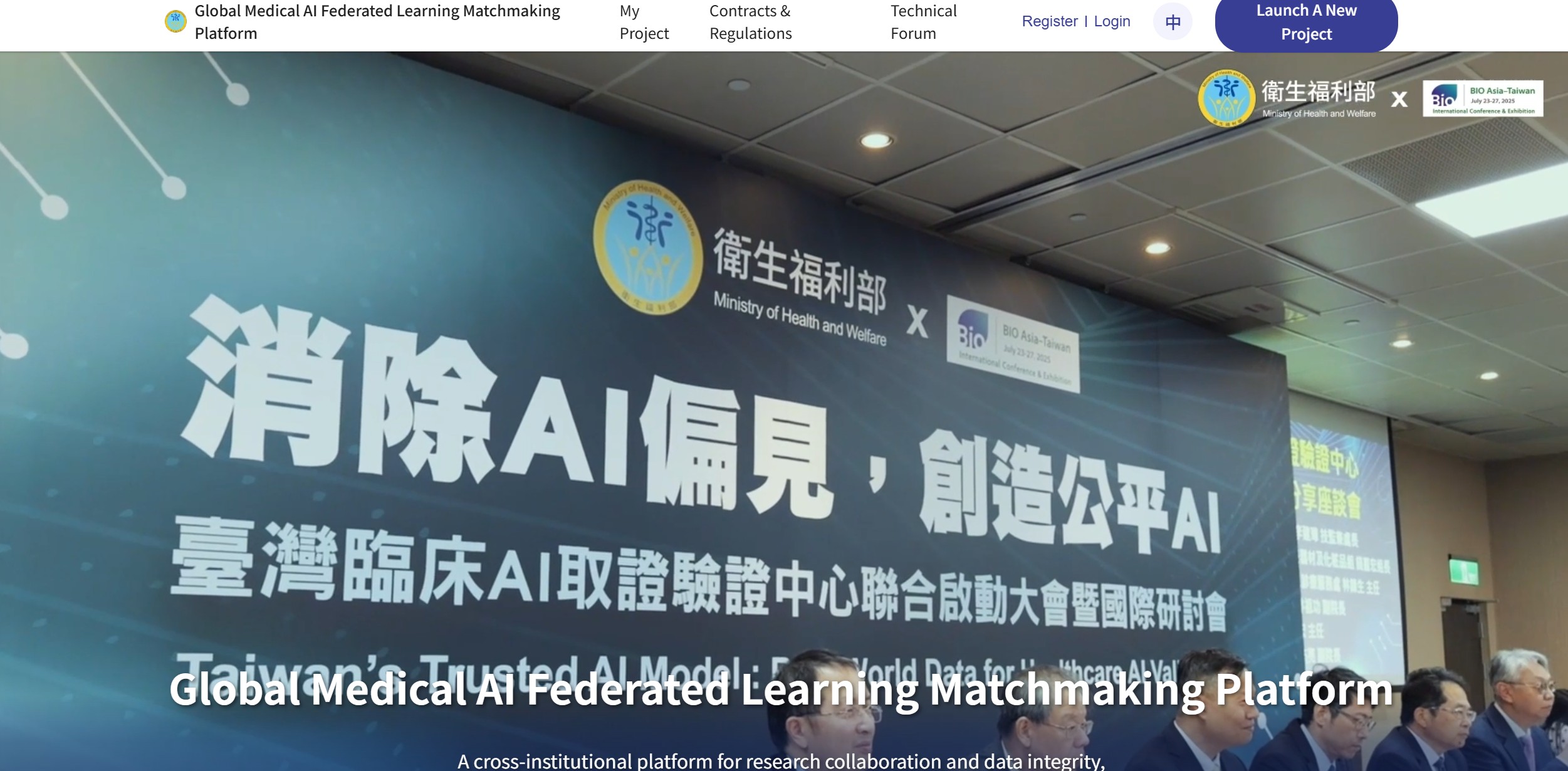
Figure 1. Global Medical AI Federated Learning Matchmaking Platform
Taiwan-Thailand Cross-Border Federated Learning Collaboration
Taiwan’s Ministry of Health and Welfare (MOHW) and Thailand’s Mahidol University have officially established a deep technical partnership and signed a Memorandum of Understanding (MOU) on Federated Learning in September 2025. The core of this MOU involves utilizing federated learning technology to train smart healthcare models across international hospital networks without moving raw medical data. Currently, both Taiwan and Thailand sides are independently developing their respective local base models focused on clinical themes of mutual interest. These models will subsequently be optimized through cross-border federated fine-tuning, leveraging the combined scale and diversity of both the Thai and Taiwanese hospital networks. This collaborative framework ensures that both institutions achieve superior model accuracy and robustness through shared data insights while maintaining independent model development.
At this stage, the collaboration between Taiwan and Thailand focuses on the following three projects:
- Project A: AI-Assisted Mammography
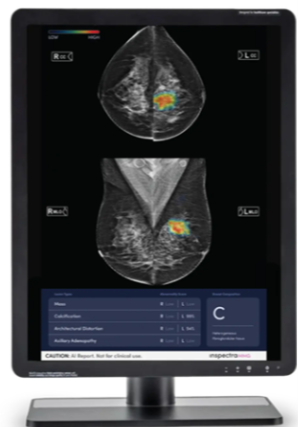
Figure 3. AI-Assisted Mammography
The primary objective of this project is to enhance early lesion detection and precision diagnosis through automated anomaly annotation for mammography X-ray images. By deploying this solution at the hospital edge, the partnership ensures that clinical AI models can be trained and validated locally within the hospital network. This approach facilitates high-accuracy cross-border validation, allowing clinicians to leverage diverse datasets to improve the sensitivity and specificity of breast cancer screenings while maintaining full control over sensitive patient data.
- Project B: AI-Assisted Chest X-Ray
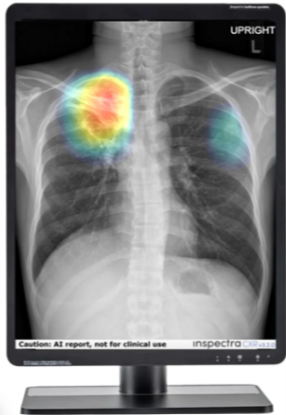
Figure 4. AI-Assisted Chest X-Ray
This project focuses on the implementation of automated rapid screening for Tuberculosis using Chest Radiography. The clinical significance of this collaboration lies in its ability to drastically reduce the risk of community transmission by assisting in epidemic prevention, particularly in high-prevalence areas. By utilizing the federated learning infrastructure, the MOHW and Mahidol University can optimize their screening tools using the combined scale of both Thai and Taiwanese hospital networks. This ensures that the resulting AI tools are robust, standardized, and capable of providing high-speed screening to support public health efforts.
- Project C: AI-Assisted Prostate Cancer Pathology Analysis
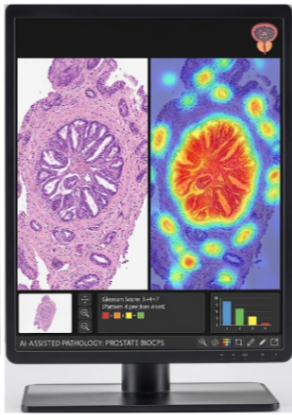
Figure 5. AI-Assisted Prostate Cancer Pathology Analysis
The core objective of this initiative is to enhance diagnostic precision through automated Gleason Grading for prostate cancer pathology. By precisely identifying Gleason Patterns 3, 4, and 5, this AI-driven approach assists pathologists in filtering out benign or negative slides, significantly improving clinical efficiency and grading accuracy. Integrating this tool into the federated learning framework allows for the validation of pathological AI models across diverse international datasets. This collaborative training ensures that the system remains robust across different laboratory environments, providing clinicians with a standardized decision-support tool that optimizes specialized cancer care workflows.
Federated Learning Matchmaking Platform